Enrolling Now for 2026-27 School Year.
Enrolling Now for 2026-27 School Year.
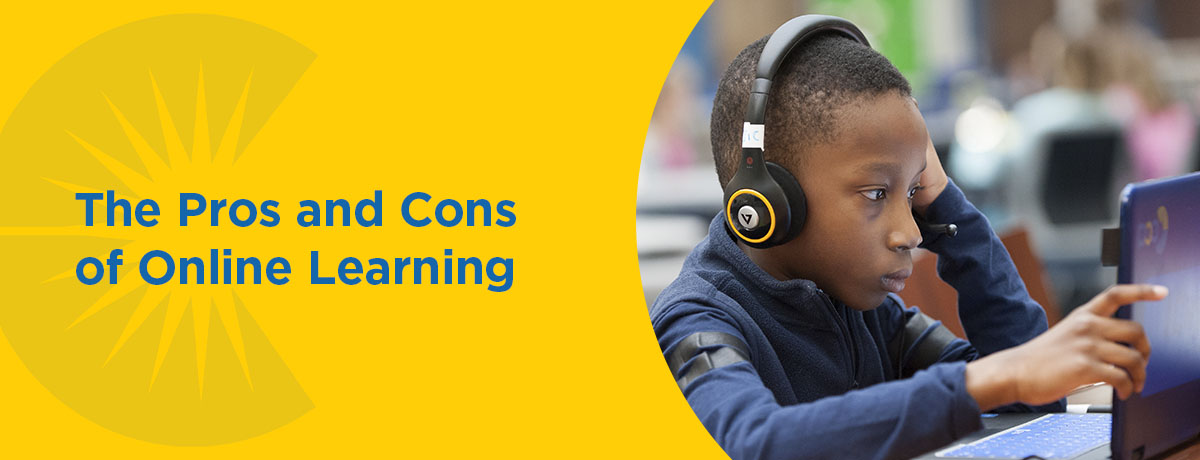
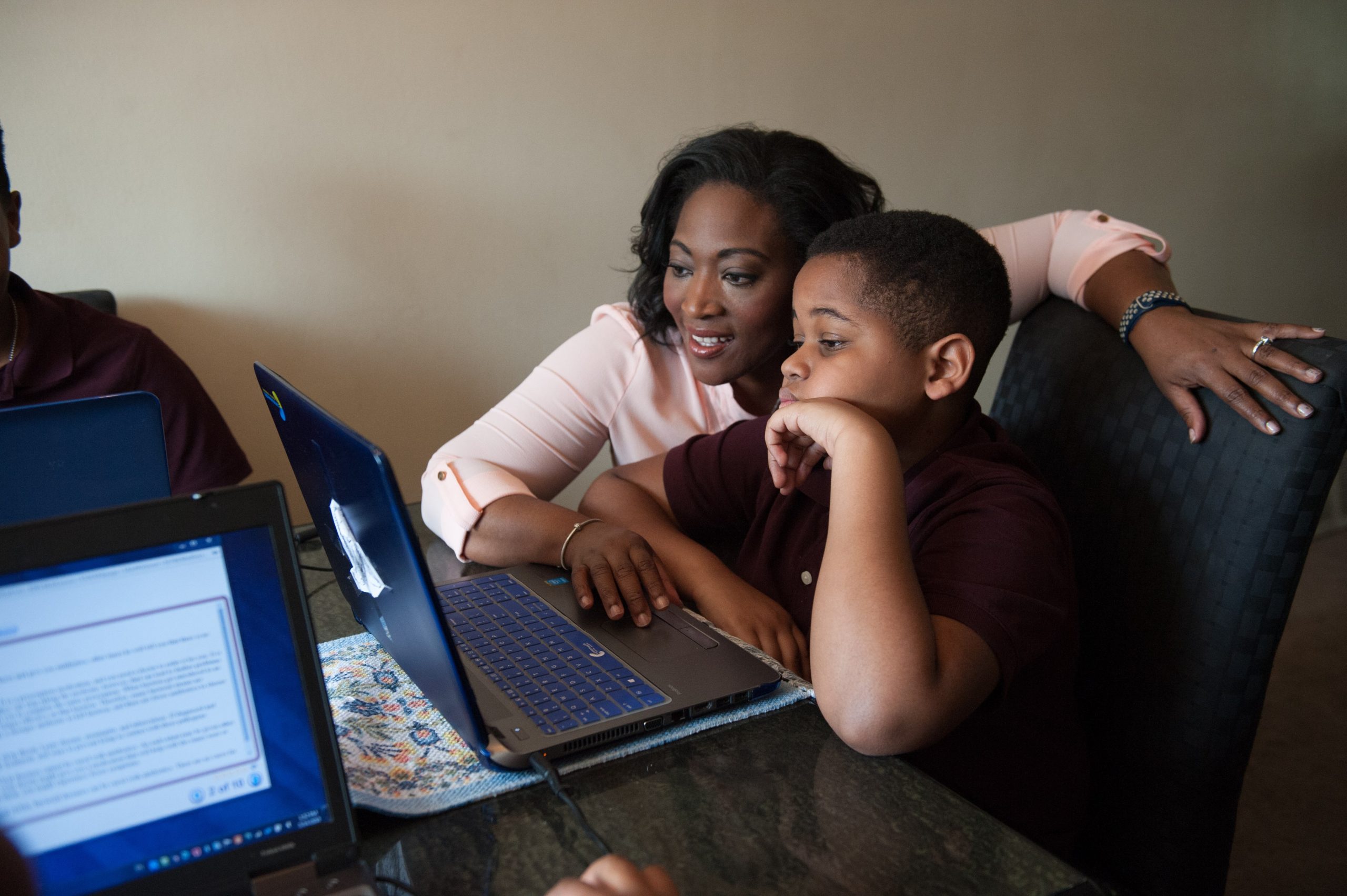
In the past, school and home were distinct realms. However, times have changed, blurring the bright line between the domains. Parents now realize that online learning offers benefits that traditional schooling can’t — including flexibility, safety, and academic control.
Still, many parents have questions about the pros and cons of online schooling or wonder how unconventional learning affects children and their families. As they weigh the decision, a close look at all sides of the equation could reveal that online learning brings harmony to the school day and family life.
An online education for K-12 learners can positively affect family life and a child’s academic progress. Students can learn at their preferred pace from the comfort of their homes, accessing courses and resources without geographical limits. The benefits of this customizable learning approach include:
With online learning, you don’t have to contort the family schedule to fit a school timeline. Children can access learning whenever it’s best for them and their families, while spending less time getting children to and from school every day.
Real-time virtual sessions offer genuine classroom opportunities for kids to engage with highly qualified teachers and each other. If they can’t attend those sessions, they have access to all the recordings and course materials, letting them catch up at any time and stay on track without feeling overwhelmed.
Suddenly, the outlook changes drastically for families and kids. Children can pursue high-level training, compete in sports or the arts, or manage medical conditions without missing class time. High school students don’t have to sacrifice schoolwork while gaining valuable experience at part-time jobs.
Families can travel to gain real-world learning opportunities, connect with far-flung relatives, and teach children the value of volunteer service. Whatever their priorities, families can escape the daily grind thanks to flexible scheduling.
Online learning is a student-centered atmosphere, where children are active participants who decide what they will learn and how. Instead of dictating live sessions, teachers provide guidance that leads children to make discoveries.
Studies show that online learning delivered through a student-centered model promotes more in-depth discussions, improves educational quality, and inspires students to participate. Learning at home also minimizes distractions, so teachers don’t waste time on classroom management, and your child can concentrate on live sessions.
Every child comes to school with unique needs. They have their academic strengths and weaknesses, and their distinct learning styles. Online school naturally empowers teachers to develop educational plans that reach individuals, not entire classes. Personalized education means customized learning, tailored to your child’s needs. Children are more enthusiastic as they dive into the subjects that fascinate them and see tangible gains in the areas where they struggle.
Personalized learning and online courses also eliminate wasted time moving around the school or sitting through content your child has already mastered. With Commonwealth Charter Academy, your child can progress more quickly through concepts they understand and spend more time on topics they have not grasped yet.
As much as we’d like to see our children stay young and innocent forever, one thing is inevitable — they will grow up. Is your school preparing them for that day?
CCA takes a personalized approach to online education. Students begin exploring possible careers in elementary and middle school. By high school, they venture down pathways designed to prepare them for fulfillment in whatever comes next. Whether your child’s future holds college, career training, the workforce, or the military, CCA’s personalized learning plan adapts to the changing child, preparing them for success after graduation.
As a K-12 cyber charter school, CCA also assists families with comprehensive tech support. An established tech support helpline is available throughout the week during regular business hours to guide families through troubleshooting and challenges with their home technology. Families can also visit statewide CCA support centers for academic and personal support.
Who says brick-and-mortar schools get to hold the monopoly on socialization? At CCA, online school includes a rich array of opportunities to mingle. Children learn to make friends while avoiding the toxic effects of bullies and school cliques.
Hundreds of annual educational and social field trips offer fun and enriching learning experiences. Parents and guardians can also enjoy these excursions as chances to build support networks and lasting friendships. CCA clubs unite young learners around shared interests in everything, from building robots to digital photography. Kids who love sports or the arts can join community activities and, in Pennsylvania, have the legal right to participate in extracurricular activities in their local school districts.
Cyber schools can also protect students from the harmful effects of bullying. Around 19% of all students, from middle through high school, experience bullying at some point during the academic year. While 21.6% of incidents happen over text or online, most students experience bullying somewhere on school grounds. About 37.5% of bullying incidents occur in stairways or halls, 39% happen in the classroom, and another 25.1% are in the cafeteria.
Virtual learning environments eliminate the physical areas where students commonly experience bullying, creating more positive spaces where students can focus on learning and making friends. Students can thrive academically when they feel safe with their peers and faculty.
Traditional brick-and-mortar public schools don’t always cater to every student’s needs. Alternative schooling options allow families to explore other opportunities, but they are not equal. Private schools can come with pricey tuition, with the average reaching just over $17,000 for private high schools and nearly $13,000 for private elementary and secondary schools. Homeschooling saves on tuition but typically offers less support — families are responsible for arranging all live instruction sessions, activities, and socialization opportunities.
Cyber charter schools are ideal for many families. Because these are public institutions, parents do not have to pay tuition. The online environment still allows families to customize learning spaces and schedules, without having to do everything alone. CCA’s comprehensive family support keeps families connected to the school community and resources at no cost to Pennsylvania families.
Traditional classrooms often leave students waiting for their test results long after the teacher has moved on to new material — a gap that can impact foundational learning. With real-time assessments in online sessions, students can ensure they understand what they’ve learned before progressing.
With the engagement of students, families, and teachers in mind, CCA created a unique, customized learning management system called edio®. Educators can use edio for instant insights, allowing them to proactively aid students who might need more time in specific areas.
Online schools like CCA have access to some of the best and most qualified teachers and instructors. Because online teachers don’t need to commute to virtual classrooms, they can deliver meaningful content no matter where they are, and we can broaden our team beyond physical location restraints.
Our state-certified teachers go above and beyond to work with students and their families. They follow the latest curriculum and best practices in cyber education and use advanced technology to make learning engaging for their students.
With personalized phone, virtual, or in-person support, CCA instructors can meet your child where they are and ensure they receive the best education possible. Teachers will develop personalized online courses and electives that match each student’s skills and interests.
While parent engagement in traditional schools typically relies on paper notifications that might never reach home, online environments enable families to be more involved in their students’ learning experience. Through edio, families and learning coaches can access a student’s progress and upcoming assignments or extracurricular activities in a centralized dashboard.
Families can also help their students develop schedules and routines that work best for them, making them more likely to complete assigned tasks. Online programs make it easier than ever for parents to stay involved in their child’s education — without the headache of paper-based updates.
Naturally, online learning has some potential drawbacks, but CCA embraces them as challenges to solve. Our well-designed approach centers on students and families as we strive to deliver a seamless learning experience.
Cyber school students and families must adapt to a new way of learning — one where the teacher and study notes are on a screen and management of the school day comes into the home. CCA streamlines the adjustment period.
Through edio, students can participate fully in live sessions or watch recordings of those same instructions, whether they’re seeing them for the first time or going back to review a new concept. Parents use edio to collaborate and communicate with teachers and staff, check their child’s progress, and review teacher feedback. Teachers use edio to communicate with parents and students, customize sessions, and provide on-the-spot support.
With all the powerful tools available in edio, CCA ensures new families have the training and ongoing support they need. The quick adjustment period to online learning promises academic success by getting kids off to a bright start.
In traditional brick-and-mortar schools, teachers stand in front of the class, providing instructions and collecting completed assignments. Instructors are responsible for keeping your child on track in those environments. With online learning, more duties fall on your child, especially as they get older.
Self-discipline is essential for academic success, but as many CCA graduates will tell you, cultivating that high level of accountability gives them an advantage. Cyber students develop unparalleled time-management skills that send them sailing into college and the workforce well ahead of their peers.
Establishing self-discipline and motivation in the learning-from-home environment can be challenging for many students and families. We encourage students to use these tips to get started:
CCA encourages families to develop schedules and routines that create a framework for self-discipline and completing assigned tasks. CCA’s family mentors — experienced parents or learning coaches of CCA students — share informative tips, answer questions, and offer support to help families and kids build the art of self-discipline.
Many parents worry that online schools offer fewer opportunities to make friends. Though online learners don’t share a physical space with their classmates, that’s where socialization limitations end. Students who take advantage of live sessions can interact with their classmates, and highly capable teachers assign students to group discussions and projects that build the collaborative skills their future employers will demand.
Further, in-person learning does not always equal automatic socialization. Brick-and-mortar schools might provide a space where students meet face-to-face, but children remain responsible for the outreach needed to make friends.
CCA’s holistic, personalized approach to education encourages children to grow into well-rounded young adults. Our full slate of field trips brings children together for the shared joys of seeing classroom sessions come to life in the outdoors, historical sites, and museums. In clubs, like-minded children reach across the miles to share their passions for chess, video games, dance, leadership, and many other topics.
CCA even encourages learners to suggest their own clubs. With so many classmates throughout Pennsylvania, they’ll almost surely find fellow enthusiasts. Likewise, CCA offers the Community Class Reimbursement to help families take advantage of courses available in their local communities for further learning and socialization opportunities.
The power of technology to change lives includes its revolutionary, democratizing effects on education. Unfortunately, some families lack access to the technological tools to seize the opportunity, but CCA sweeps away that barrier. CCA families get access to laptops preloaded with all necessary software at no additional cost. Families can also receive a printer and a subsidy to help pay for high-speed internet that connects students with wondrous learning experiences.
Plus, families can rest assured that CCA’s technical support team is ready to troubleshoot problems and return children to learning if anything goes wrong.
The digital age has expanded access to education, but it’s also created opportunities for scammers and poorly structured schools to take advantage of unwary families. Pennsylvania law requires charter schools to receive approval from state or local authorities, but it does not require them to earn accreditation. That distinction matters.
What is accreditation? Essentially, it’s when a state-recognized body attests that the school does what it says it will. Accreditation assures families that other schools can reciprocate learning — a valuable attribute for frequent movers such as military families. It also validates the quality of the student’s education when it’s time to apply to college or seek an internship.
CCA voluntarily sought and received full accreditation from the renowned Middle States Association Commissions on Elementary and Secondary Schools. This accreditation provides objective affirmation that CCA meets standards, proving that it upholds its mission to:
In short, CCA families know that CCA provides academic rigor and accountability. Unaccredited schools in the online learning universe can’t always make that promise.
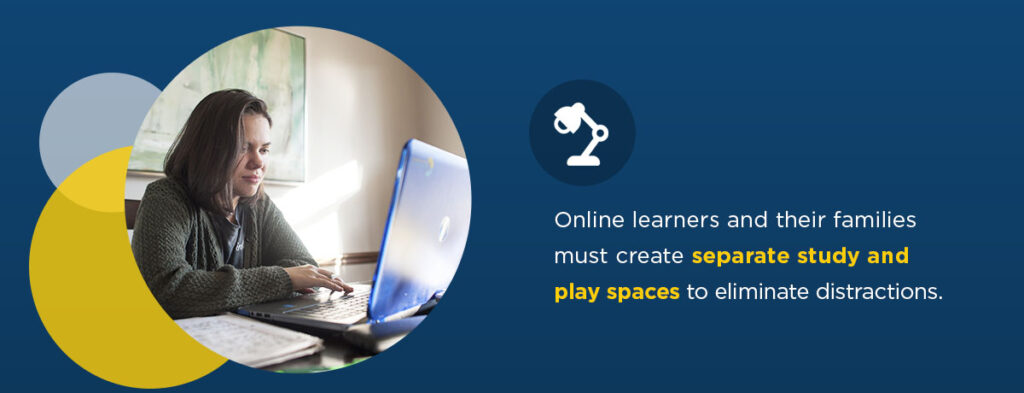
Some parents might assume online education is too challenging for their kids — after all, no teachers are watching, and the allure of social media and other entertainment can be hard to resist. CCA addresses these issues by offering numerous resources and tips for students to stay focused. We also help families create an exceptional learning environment, including establishing a dedicated in-home learning space to avoid distractions and encourage active student participation in discussions.
Our instructors also incorporate live polls, videos, and images to keep students engaged and excited in their learning. As a result, students learn how to manage their time wisely, developing the essential skills they need for life beyond graduation.
The self-guided nature of online learning can mean that getting instructor attention takes more than raising a hand when a student is working outside of a live class session. That’s why online schools like CCA offer numerous opportunities to connect with teachers, including private consultations. Students can get one-on-one attention from their instructors as needed, and tools like live chat and email make it simple to ask questions and get help with assignments.
Now you know the pros and cons of online K-12 education, consider these tips to help you decide whether it’s a fit for your child:
Consider the many benefits of online K-12 education. Your child enjoys a rich, vibrant education, and you have the flexibility to make schooling fit into your active family lifestyle. The centerpiece of the school day is your child, not the class.
CCA is mission-driven to personalize learning for every student, leveraging technology to deliver an engaging education that prepares your child for lifetime success. Contact CCA today with your questions about how online school can make your child love learning, or start the enrollment process.


Enrolling Now for 2026-27 School Year.