Enrolling Now for 2026-27 School Year.
Enrolling Now for 2026-27 School Year.
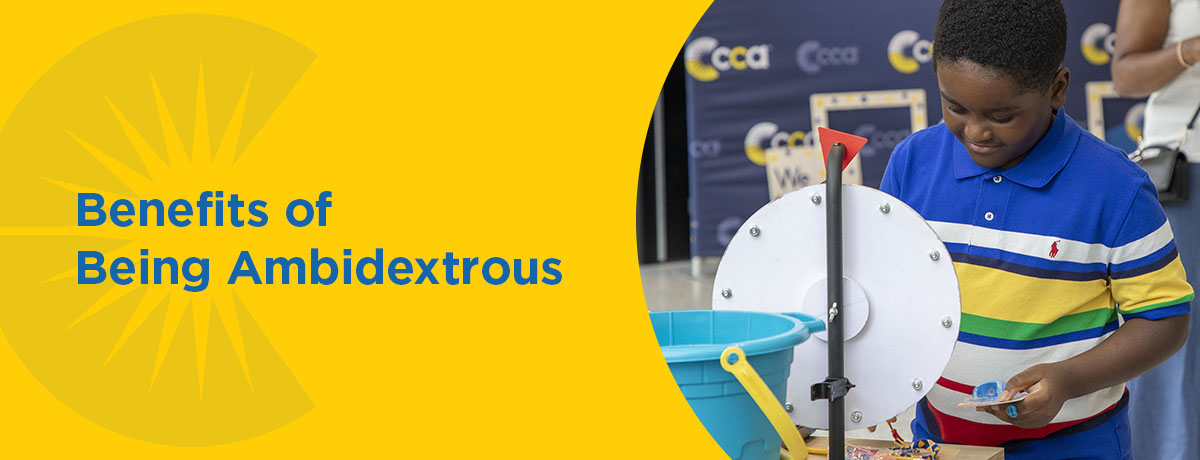

Ambidextrous children have a very rare and special gift that can benefit them in many areas. Using both hands is more than just a party trick — it’s a valuable skill in athletics and academics.
The connection between ambidexterity and academic giftedness is unclear. Though there isn’t much consistency in the research, your child is unique and can use their ambidexterity in several areas of life.
Handedness comes from both nature and nurture. You can foster your child’s ambidexterity to help it become the dominant skill it can be, just as you can nurture so many other areas of your child’s personality.
Being ambidextrous means you can use either hand to do any task and not lack efficiency either way.
Because ambidextrous people do not have a dominant hand, they also generally do not have asymmetrical brains like the majority of the population does. This can sometimes lead to certain health complications, but it also provides these people with distinct advantages. However, whether gifted children are ambidextrous or vice versa is hard to say. No studies definitively prove one way or the other, as the brain’s connection to our bodies remains a mystery.
There is no direct correlation between ambidexterity and giftedness in children, though using both hands can give children advantages in various aspects of their lives.
Below are some potential advantages of being ambidextrous.
Some experts believe being ambidextrous correlates with better memory. This is because the brain regions that make someone ambidextrous are also linked to memory and, in some cases, can improve it.
When a child uses both hands, it may take them longer to develop certain motor skills because they have twice as many skills to master as most people. However, the way their brains are wired may lead to greater motor control. This can help them achieve great success in athletics, music, and art by enabling them to multitask more efficiently.
Daily tasks can be less trying for someone using both hands or both feet. Being able to write with either hand is especially useful in school. Say a child is handwriting a stack of notes or filling out many worksheets. A cramping hand won’t stop them. The minute they feel discomfort, they can pass their pen or pencil to their other hand and keep working without missing a beat.
There are many scenarios in which being ambidextrous could give players advantages in sports. As a kid, there may not be as many benefits because the level of competition isn’t as high, but they should begin building these skills early.
For example, think of a soccer striker being equally good with their right and left feet in front of the goal. Consider a batter who knows the pitcher thinks they are a right-handed hitter, but they can switch and force the pitcher to change their tactic. A quarterback who can switch to his opposite hand if he is pressured from one side would be a huge advantage to his team.
Though further research is needed, there may be a connection between ambidexterity, creativity, and brain function.
Regular use of the nondominant hand boosts creative thinking. Research suggests that contracting one arm’s muscles while keeping the other arm at rest can activate the brain hemisphere controlling the contracted muscle. The left hemisphere directs the right hand, while the right hemisphere directs the left hand. The information-processing approach used by the right hemisphere could facilitate creative or divergent thinking.
Additionally, studies have shown that writing with both hands can enhance cognitive function. This could make the brain more adaptable to different ways of thinking and information processing, unlocking new creative potential.
Research also suggests that sustained use of the nondominant hand increases self-control and willpower. In one study, participants were asked to use their nondominant hand to complete daily activities, such as opening doors, stirring coffee, and using the computer mouse, for two weeks. As a result, these individuals displayed improved impulse and emotion control.
As outlined in the same study, using the nondominant hand may enhance function in both brain hemispheres. It also strengthens the connection between the sensorimotor areas in both hands. In addition to improved creativity and self-control, this process may aid with stress management and even reduce symptoms of depression.
More research would be useful for comparing routine nondominant-hand use with other stress management techniques, such as daily mindfulness meditation.
Whether you’re curious about developing your child’s ambidexterity or want to learn more about this skill in general, we’ve answered some common questions.
While training yourself to become ambidextrous is possible, it’s not easy. You can introduce ambidexterity with simple tasks, gradually working your way up to more complex activities. This can make the process easier and more manageable.
Here’s a recommended step-by-step approach for you or your child:
Ambidexterity activates both hemispheres of the brain more frequently, which strengthens the neural connections between them. This higher brain connectivity could lead to more diverse thought patterns and creative associations. Using both hands requires the brain to approach tasks from different angles, potentially enhancing critical thinking.
With that in mind, ambidexterity can be linked to enhanced creativity, self-confidence, and self-discipline, which could boost your child’s academic performance in school.
Mixed-handedness, also called cross-dominance, involves using specific hands for different tasks based on preference. For instance, a mixed-handed individual might write better with their right hand but throw better with their left.
Ambidexterity involves equal skill and preference with both hands for the same tasks. Ambidextrous people don’t have a dominant hand — they can write or throw effectively with either hand.
True ambidexterity is rare. It’s only present in about 1% of the global population. While mixed-handedness is also relatively uncommon, it’s more prevalent than ambidexterity.
Men may be more prone to ambidexterity than women. An individual with synesthesia is also more likely to be ambidextrous than the average person.
There’s no evidence that ambidextrous people are inherently smarter than right- and left-handed individuals. While some studies suggest a slight advantage in certain cognitive skills, handedness does not determine intelligence.
While ambidexterity doesn’t necessarily equate to better brain function, it has been linked to a few cognitive benefits, such as enhanced communication between brain hemispheres, motor skills, memory, and creativity. So, one could technically say that it’s “good” for the brain.
Ambidexterity is especially advantageous in activities that require adaptability, coordination, and fine motor skills. Some examples include:
Commonwealth Charter Academy (CCA) strives to provide opportunities that fit each child’s specific needs. Whether they need more challenge, a slower pace, or somewhere in between, we want them to thrive and learn in a way that fits them as an individual. We also offer many extracurricular activities to help students explore their other interests.
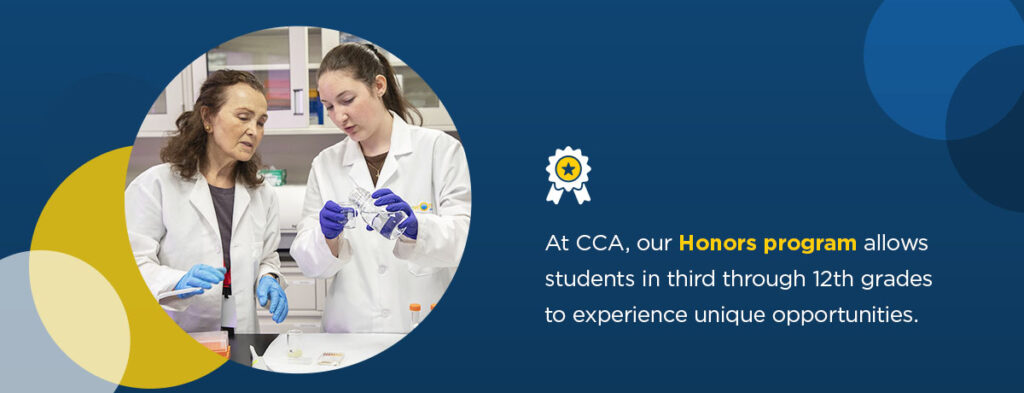
At CCA, our Honors program offers students in grades 3 through 12 unique opportunities. The rigorous and challenging schooling sets your child up for success in high school and beyond. We are committed to identifying each student’s specific characteristics and catering to their needs.
The Honors program incorporates project-based learning, class discussion, and problem-solving. If ambidexterity is your child’s gift, we will create projects that grow their motor skills and foster their intellectual understanding of the world around them.
If an IEP or 504 plan is in place to ensure your child is properly supported, our special education program can fit their specific needs. What is special about our program is that children participate from the comfort of their own homes. This helps students stay more focused by eliminating the distraction of a full classroom. If your child learns at a different pace, they can match whatever that looks like for them because of our flexible learning options.
The online format also eliminates concerns regarding how your child would be able to communicate about their day, as you will be with them and have a better understanding of what they are doing and learning.
We also develop personalized learning plans that enable more in-depth communication among the parent, the student, and the student’s team of teachers. Using sources of information such as grades, proficiency tests, the student’s strengths and needs, career counseling, and family input, we strive to develop a well-suited, custom path to help your student succeed.
At CCA, we offer a variety of clubs and extracurricular activities that allow students to pursue their interests outside of schoolwork, explore new hobbies, and meet other students. Our art clubs cover traditional art, photography, graphic design, crafts, theater and dance, and print and broadcast media. We also have a chess club, a gaming and computer club, a science club, and a brainteaser club for students interested in logic problems. If your child is interested in a club we don’t offer, they can apply to start a new one.

Being ambidextrous can offer many benefits for kids. At CCA, we promote opportunities for students to use these strengths to their full potential. Contact us online today to learn more about our programs and how your ambidextrous child can be well served so they succeed.

Enrolling Now for 2026-27 School Year.