Enrolling Now for 2026-27 School Year.
Enrolling Now for 2026-27 School Year.

Your child finishes school, closes their laptop, and immediately picks up their sketch pad or bubble wand. It looks like simple downtime, but something more valuable is happening beneath the surface. The benefits of hobbies reach beyond keeping kids busy. They build skills, confidence, and coping tools that carry into every part of a child’s life.
You might wonder why it’s important to have hobbies when academic demands already fill so much of your child’s schedule. The answer lies in how hobbies complement and enhance learning rather than compete with it. Research on organized activities such as clubs, arts, and civic involvement has found that students who participate tend to see gains in academic performance.
This article explores 12 ways hobbies help raise confident, capable kids, and the surprising science behind why a little unstructured joy can go a long way.
Every child deserves opportunities to explore interests beyond required schoolwork. Whether your child gravitates toward physical activities, creative pursuits, or intellectual challenges, regular engagement with hobbies shapes their development in profound ways. These 12 well-researched benefits show why it is important to have hobbies and how they help raise capable children who know how to balance responsibilities and personal fulfillment.
School projects, tests, and social dynamics create pressure for children. When your child spends leisure time on activities they enjoy, their stress levels decrease. A study of elementary-age children found that hands-on leisure activities, like flower arranging, helped kids recover from stress. Flower arranging worked better than a basic writing activity at helping kids reset physically and emotionally.
A child who spends an hour building with blocks or practicing gymnastics gives their brain a different workout than sitting at a desk. Shifting between mental and physical activities offers a break from academic pressure and can leave children feeling more refreshed and ready to return to their studies.
Popular hobbies bring together children who might never interact in a classroom setting. The quiet learner who loves chess finds their voice as they explain strategy to a peer. The energetic child channels their enthusiasm through team sports.
These hobby-based friendships can feel particularly authentic because they grow from shared enthusiasm rather than proximity. Children learn to communicate about subjects they care about, navigate group dynamics, and support one another through challenges specific to their shared interests.
Different types of hobbies can contribute to your child’s overall health. Dance improves coordination while teaching rhythm and cultural appreciation. Gardening connects children with nature while teaching them patience and the importance of scientific observation.
Even seemingly sedentary hobbies, like reading or puzzle-solving, require focus and mental effort. Many parents find that a mix of hobbies, some active, some quiet, gives their child a fuller range of ways to grow, because different activities tend to stretch different skills.
Watch your child master a difficult skateboard trick or complete their first knitting project, and you’ll see confidence bloom. Unlike grades, which are based on external evaluation, achievements in hobbies belong entirely to your child. They set their own goals, work at a pace that suits them, and measure success by their standards. This self-directed achievement encourages intrinsic motivation and self-esteem that carry into other areas of life.
As a parent, you may worry that hobbies distract from schoolwork, but research suggests the opposite may be true. A study of students in grades 5 through 12 found a link between soft skills developed through extracurricular activities, such as perseverance and self-direction, and stronger self-regulated learning at school.
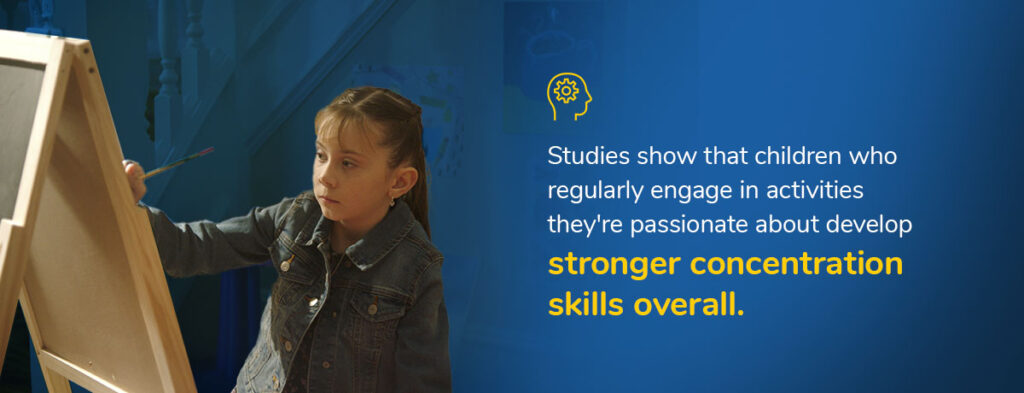
Consider how a child absorbed in building a model airplane maintains focus for hours, or how a young musician practices the same passage repeatedly until it sounds just right. These experiences give children practice at sustaining attention, a skill that can carry over into schoolwork.
Every hobby teaches skills that extend beyond the activity. Children who cook learn measurement, following instructions, and chemical reactions. Young photographers develop an eye for composition and detail. Musicians understand patterns, timing, and the relationship between practice and improvement.
A study of teens found that time spent on hobbies was linked to stronger academic performance, even after accounting for time spent on schoolwork, sleep, and other daily activities. These skills don’t stay confined to hobby time. They enhance learning across subjects and prepare children to build new skills throughout their lives.
Balancing hobbies with schoolwork teaches children to make choices about how they spend their time. They learn through experience that finishing their work efficiently leaves more time for activities they enjoy. This natural motivation to manage time well proves more effective than external pressure.
Children who successfully balance multiple interests may develop the work-life balance skills they’ll need as adults, learning early that life includes both responsibilities and rewards.
While social media and video games have their place, hobbies offer a richer engagement experience than passive screen time. A child painting a landscape engages creativity, fine motor skills, and observation. A young coder creating a game engages in active screen time, learning problem-solving and using technology productively rather than simply consuming it.
Hobbies encourage children to create rather than only consume, and this encourages innovation and original thinking that passive entertainment cannot match.
Hobbies like learning to juggle, mastering a chess opening, or training for a race involve setbacks. Children learn through experience that improvement requires practice and that failure represents a learning opportunity, not defeat.
These lessons in perseverance are vital when children face academic challenges or later in life when they encounter adult challenges. They approach complex subjects with the same determination they bring to perfecting a guitar chord or landing a gymnastics move.
Creative hobbies provide safe outlets for complex emotions. A child might express frustration through drumming, process sadness through poetry, or find calmness when drawing. These emotional outlets support mental health by giving children tools to understand and express their feelings constructively, tools that many children carry with them beyond childhood.
Shared hobbies create connection points in daily routines. Consider these ways your family can explore hobbies together:
These shared experiences provide natural conversation starters and help families connect through joy rather than obligation.
Many successful adults trace their careers back to childhood hobbies. If your child loves taking things apart, they might become an engineer. Your young storyteller might become a journalist or content creator. Even when hobbies don’t directly lead to careers, they demonstrate dedication and passion on college applications.
A long-term commitment to any hobby shows perseverance, self-direction, and the ability to pursue excellence independently.
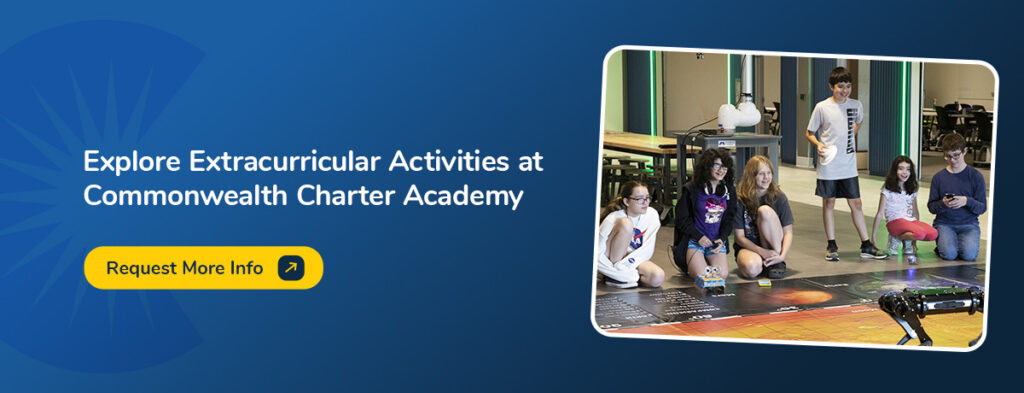
At CCA, we recognize that meaningful learning happens inside and outside traditional academic settings. Our flexible cyber school model gives learners time to follow the hobbies and interests that make them unique individuals. CCA offers dozens of clubs ranging from creative writing to engineering, along with specialized programs in cutting-edge fields. Students also have access to more than 1,000 field trips, internships, and special events each year across Pennsylvania, giving them many ways to discover and develop their passions.
Our personalized learning approach means students can structure their days to include rigorous academics and meaningful time for hobbies. This supports the reduce-stress, build-new-skills benefits of hobbies. Whether your child dreams of joining our robotics team, exploring AgWorks at CCA™, or participating in virtual art showcases, CCA supports your child’s development.
Request more information today to discover how our innovative educational model fosters excellence and exploration.

Enrolling Now for 2026-27 School Year.