Enrolling Now for 2026-27 School Year.
Enrolling Now for 2026-27 School Year.
Supporting students as they transition into new learning areas isn’t always easy. Preparing for college can feel overwhelming for students who don’t know what to expect. While many young people may have an idea of what they want to do with their lives, choosing the right path to get them there can be a challenge.
As technology and online education continue to evolve, many parents are considering the benefits of virtual schooling. Understandably, this option raises a range of concerns and questions about what it will involve. As every young mind is unique, this choice will depend on numerous factors before a final decision is made.
Finding the right way to support students on their journey to higher education is important. How does online schooling support them when preparing for college? Commonwealth Charter Academy’s guide has everything that concerned parents need to know.
The world continues to embrace new ways of working remotely, but these changes don’t end at the workplace. Online educational institutions have been prepared for these changes for a long time. Virtual learning is now a globally accepted alternative to brick-and-mortar education. The number of online learners worldwide is expected to reach 1.2 billion by 2030.
Young learners who are considering college may wish to begin their digital learning now to align with this growing trend.
Parents may be concerned about how admissions officers perceive online learning. However, reputable online learning institutions provide quality education that’s academically rigorous and respected by colleges. The foundational aspects of learning are far more important to college administrators, and the educational delivery method is rarely a deciding factor.
The National Association for College Admission Counseling (NACAC) states that officers rank grades and the strength of learning curricula as the top factors influencing their decisions. This has been the case for several years now.
Knowing which resources are available in online schooling to support students’ college-preparation journey is important. As no two students and career goals will ever be exactly the same, these resources should vary depending on the student.
Many online learning institutions provide a personalized learning plan to support college readiness, offering young people:
A tailored learning approach can focus on areas of improvement in a positive way, increasing motivation and engagement with the learning material.
Online schools can offer young people access to a broader range of AP and honors courses. Giving motivated young minds a chance to earn some of their college credits early shows that they can handle college-level work.
These courses can be academic or sports-focused. Some online high school courses are approved by the National Collegiate Athletic Association (NCAA) eligibility center. Students looking to play Division I and II sports can take the right courses for eligibility when they reach college.
Official proof of hard work and achievements is essential for a strong college application. Accredited online schools provide college admissions teams with official transcripts, GPAs, and any associated diplomas. This information is a valuable resource available in online schooling. Supporting a student’s college-preparation journey through concrete, individual metrics shows admissions officers a clear learning path toward their final application.
Other demonstrative measures include the quality of the school a family has chosen for online education. Online schools accredited and regulated by the state’s department of education are associated with the highest educational quality standards.
Academic results are a key part of a successful college experience. However, this is just one piece of a larger puzzle related to how online schooling supports students preparing for college. There are many critical soft skills that an online learning environment will organically nurture in young minds.
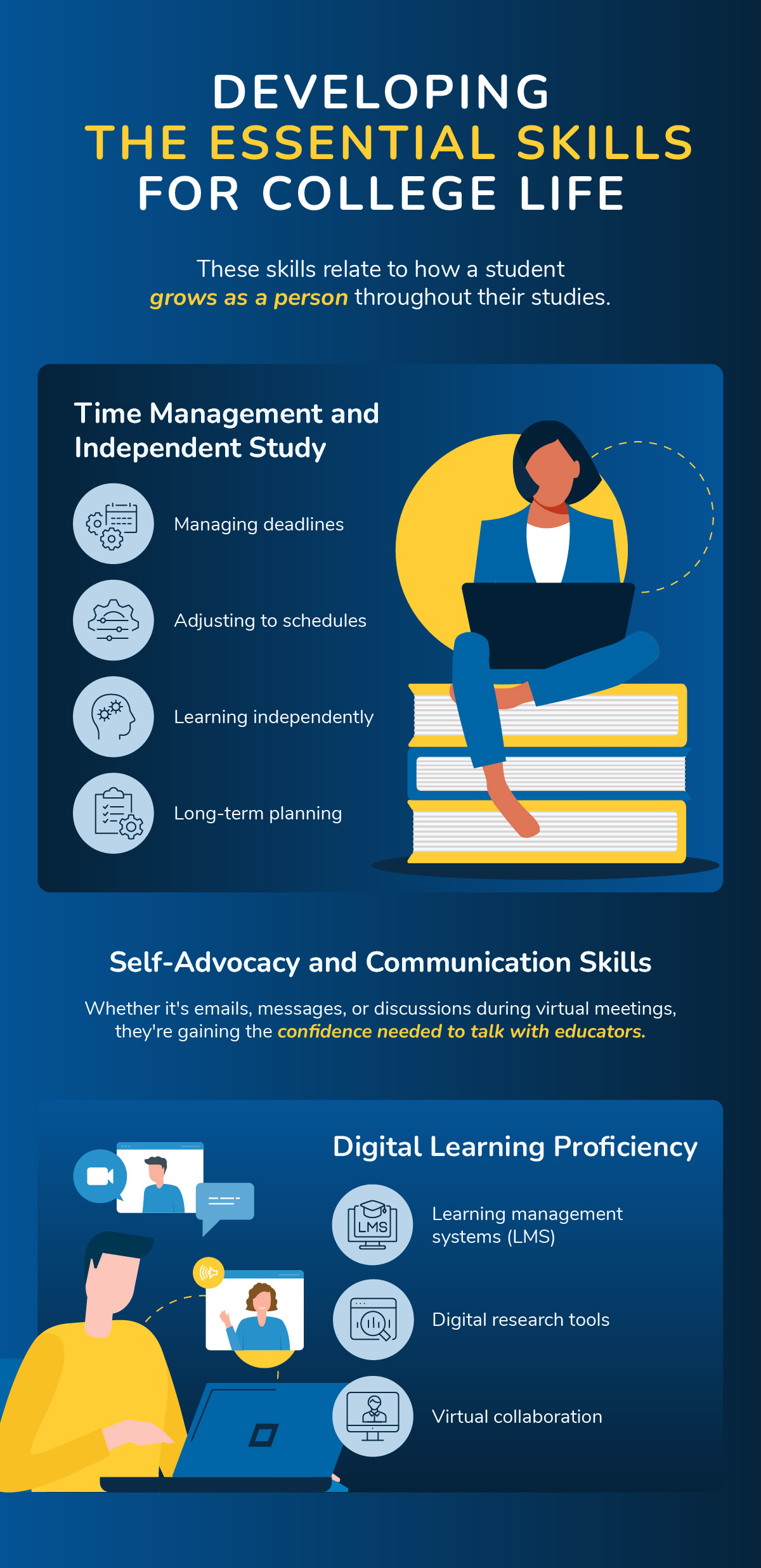
These skills relate to how a student grows as a person throughout their studies.
Managing time effectively is something learned over time. Studies have linked poor academic performance in college students to poor time management. This has also been noted to lead to stress due to academic and extracurricular activities.
The online schooling model is built on the idea that young people should be more involved in their studies and schedules. Before they get to college, they’ve already had experience with:
When students are equipped with all of these skills, the transition to college learning doesn’t have to be as overwhelming or confusing.
College readiness doesn’t begin and end with academic skills. Emotional intelligence, advocacy for oneself, and the ability to communicate clearly are essential to a young person’s growth. Students in traditional learning environments may initially find communicating with college professors and other faculty members too daunting.
Virtual learning encourages students to converse clearly and professionally with instructors. Whether it’s emails, messages, or discussions during virtual meetings, they’re gaining the confidence needed to talk with educators.
The United Nations’ 2030 Agenda for Sustainable Development lists inclusive, quality education as a core priority worldwide. It’s one of the many reasons why digital technologies in the classroom continue to be developed. Over the next few years, students who are proficient with online learning tools will be ahead of the curve.
Colleges already have strong digital ecosystems in place. Online students who are preparing for higher education can gain experience in these systems via:
These skills transfer into a strong understanding of digital etiquette and how to be responsible and respectful in online discussions.
The college application process can be stressful for the entire family. Some applications will take months, carefully putting together something that shows their achievements and individuality. From the perspective of college admissions staff, they’re faced with a pile of submissions to review.
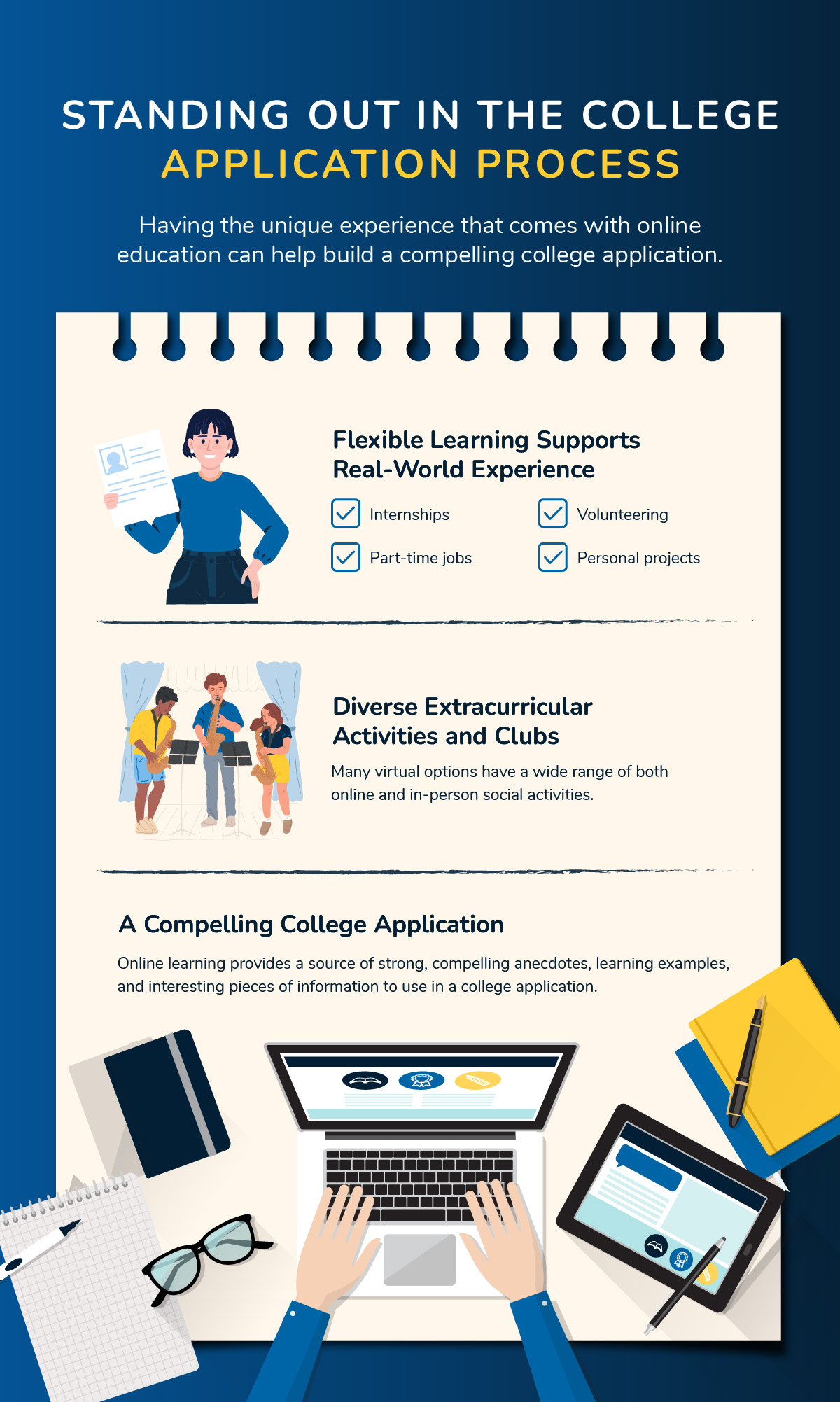
Having the unique experience that comes with online education can help build a compelling college application. It can also support a student’s experiences outside of education, helping create moments that stand out to admissions committees.
Having experiences and interests outside of the classroom can make a college application far more interesting. For parents of students hoping to go to college, these experiences can include:
These experiences show that an applicant is a motivated, caring person who takes pride in going the extra mile.
Perhaps the biggest myth about online learning is that it’s lonely or isolating. Many virtual options have a wide range of both online and in-person social activities. Students can get together for hobbies and clubs at physical locations, or plan field trips where they hone their socialization skills and develop strong friendships.
This opportunity provides virtual learners with the best of both worlds, as they find local friends and connect with peers who have shared interests across a wide geographic area. Having a deeper understanding of other people’s lives, experiences, and backgrounds is a natural learning outcome as well.
College applications are a tightrope walk. There’s the risk of coming across as insincere, boastful, or uninteresting. Online learning provides a source of strong, compelling anecdotes, learning examples, and interesting pieces of information to use in a college application.
All of this helps create a more confident, well-prepared applicant. Potential college starters will feel more at ease when talking to decision-makers or coming up with specific answers to questions other students may stumble over.
Traditional learning will provide support for students transitioning into higher education. However, a personalized online learning experience gives students a clear idea of what to expect on their own specific learning journey. This includes support and guidance from qualified school counselors who know the student well and ensure they take the right steps.
Examples of the online learning support students may receive include:
These resources don’t necessarily end after students leave their online learning environments. Additional support is available for students who require some extra help adjusting to their first year of college.
It’s perfectly natural to want what’s best for a child. When important life decisions like going to college arise, parents have a chance to celebrate what makes their loved ones unique. Having strong, fundamental evidence of a passion for learning and education can be the final step toward a successful college experience.
Helping ambitious young minds means helping them make the right choices for their lives. It’s about looking at what a student wants to do with their life and supporting them on their journey toward it. Online learning cultivates the core social, educational, and standout skills needed for a strong application. Over time, these skills can continue to grow and develop as a student moves toward their chosen future.
Enrolling Now for 2026-27 School Year.