Enrolling Now for 2026-27 School Year.
Enrolling Now for 2026-27 School Year.
Are you evaluating online schools but not sure how to make the right decision? You’re not alone. Many parents want to find a suitable online school to supplement or replace a traditional brick-and-mortar school. The key to finding the best one is understanding your child’s learning style and support needs and finding an accredited school to match them.
Explore the top factors to consider when choosing an online school that suits your child’s goals, needs, and interests in this guide by CCA.
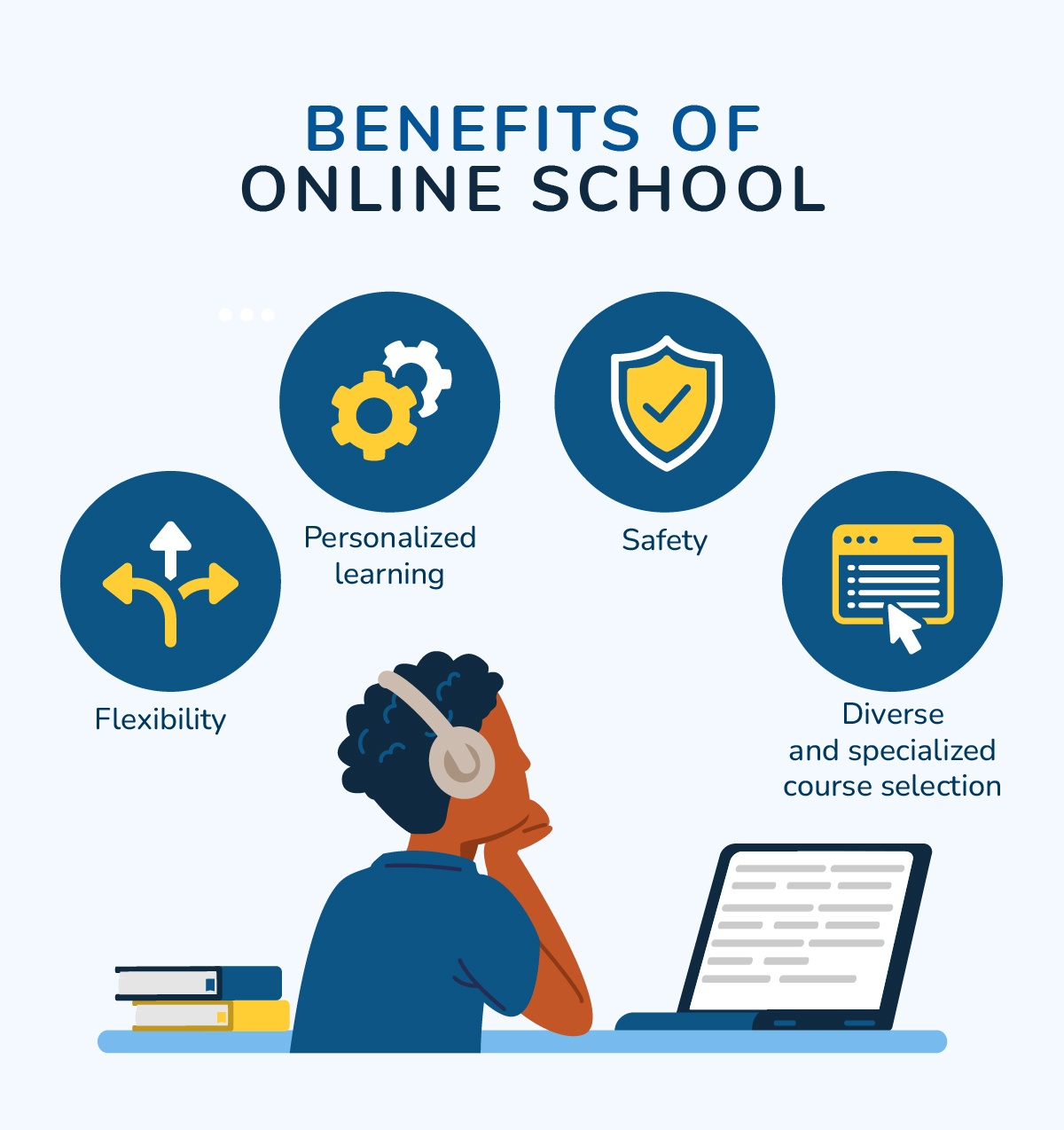
Online schools offer several benefits over traditional classrooms. Many parents choose them for the unmatched convenience, flexibility, and personal attention their children enjoy. Here are some of the reasons to consider an online school:
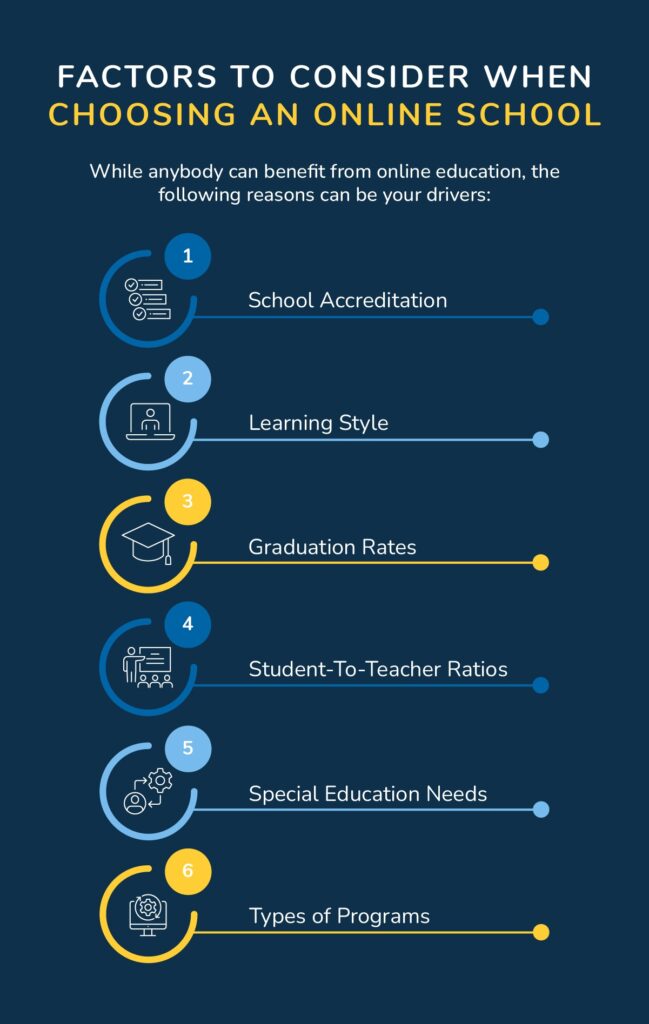
Not all online schools are equal. As a parent, you need to choose the one that will suit your child’s unique learning preferences and long-term goals. Consider the following factors to choose a good online school:
Whether you’re looking for supplemental, fully online, or blended online schools, it’s important to check their accreditation. Accreditation shows that the school has the resources, curriculum, and teaching staff to establish credibility. As a parent, this accreditation gives you confidence that you’re giving your child a valuable educational experience.
Accreditation is also important when your child is applying to other schools or institutions. Some establishments may disqualify credits from schools that don’t have adequate accreditation. Parents should research whether the program credits will be accepted by the college or university their children wish to attend. Most states don’t require public schools to be accredited by outside bodies, so typically, the main accreditation parents should look for is a state-approved one.
Understanding your child’s preferred learning methods can help you find an online school that will keep them focused and make learning as fun as possible. There are typically four main types of learning that can help you choose the right online school for your child’s educational needs:
Graduation rates are a key statistic that can help you decide if an online school is right for your child. Higher graduation rates can signal an online school model that offers sufficient support and has top teaching talent. Parents should consider graduation rates because they reflect the school’s capability to support students in finishing their qualifications in a timely manner. This statistic holds the school accountable and helps parents make more informed decisions.
It’s crucial to consider the long-term graduation rate of online schools. Many students may start behind, which can result in lower short-term graduation rates, but it isn’t an accurate reflection of the school’s education quality. Parents should strongly consider the graduation rates but not make it the sole determining factor in their decision.
Traditional classrooms may be overcrowded, which can affect the attention that learners get from teachers. Online schools can take smaller classes and offer a more personalized experience. Student-to-teacher ratios matter because smaller classes can offer students a more supportive experience.
Parents should inquire about the typical class sizes before enrolling their children in an online school. Ask for specifics on the average ratio by grade or subject, the typical live session size, and any response time policies. Here are some ways that student-teacher ratios can affect the online learning experience:
Children with special education needs can benefit from the convenience of online schooling. Section 504 of the Rehabilitation Act of 1973 states that an individual living with a disability may receive reasonable accommodations or modifications if they have a physical or mental impairment that limits major life activities. In schools, this means that children living with disabilities may be eligible for reasonable modifications that make their learning process more accessible.
Online schools remove barriers that may exist in traditional brick-and-mortar classrooms and create a more inclusive learning space for children of different abilities. Online learning is typically done in the student’s home, which is where they’ll likely feel comfortable and have access to the things they need. The flexible class schedules can also benefit learners with chronic illnesses who may have regular doctor’s appointments. It allows them to work at times when they have the best energy levels.
Students with special education needs enjoy a personalized learning path with a curriculum tailored to their unique interests. With online digital tools and the convenience of flexible schedules, learners with special education needs can learn at their own pace and in a way that suits their learning style. Online learning also removes the distractions of traditional classrooms, which can help with concentration and comfort.
Online learning offers flexibility and convenience, allowing students to enjoy the type and duration of online learning that works for them. Here are some types of online learning programs parents can choose from:
Choosing an online school is a crucial decision, and it’s important to select one that suits your child’s needs. Here are some common pitfalls to avoid:
Finding the best online school for your child’s unique learning style, needs, and goals can feel challenging. Here are frequently asked questions to clear things up:
If you want to know if an online school is the right fit for your child, involve your child in the decision process. Get their feedback on what they need for support and academic success. Look at the school’s structure, support systems, and curriculum, and evaluate whether it meets your child’s needs and long-term goals.
Parents should look out for common red flags in online schools, including hidden fees, lack of accreditation, and no information on credit transfer. They should look for schools that are state-approved and offer credits that can be transferred to other accredited colleges and universities. Online schools should also offer support for parents and students looking to learn more about fees or the curriculum.
Parents should consider factors like school accreditation, teacher qualifications and experience, fees and hidden costs, schedule flexibility, and available courses to choose a good online school. They should also think about their child’s unique learning style, goals, and any special education needs. They should evaluate whether the school will have the resources and expertise to meet those needs.
Choosing an online school isn’t about finding the perfect school — it’s about finding the best fit for your child. An online school, whether supplemental, full-time, or blended, can offer a valuable experience for all students. It can increase their knowledge and comfort around technology, give them a focus-driven environment, and allow them to learn in fun and convenient ways.
Remember to keep your child’s voice at the center of your decision and choose a school and curriculum they will enjoy. Always inquire about a school’s accreditations, teachers’ qualifications, and credit transfers to secure your child’s educational journey to meet their goals.

Enrolling Now for 2026-27 School Year.