Enrolling Now for 2026-27 School Year.
Enrolling Now for 2026-27 School Year.


For parents and families seeking an alternative to traditional schools, charter schools may be an attractive option. But the lingering question for many is whether these institutions use a standardized curriculum. Explore the curriculum differences between traditional and charter schools, so you have an idea of what to expect.
A curriculum is a structured approach to learning that provides a framework for the content, learning goals, and materials to be taught. Everything, from projects and assessments to the specific knowledge that students are expected to experience, falls within a curriculum.
The availability of a roadmap for learning helps schools and teachers meet student needs. Whether that path for learning is a traditional, centralized curriculum or a blended, personalized learning approach, a roadmap is important for students. It helps them progress from one educational milestone to the next. While it sets achievable standards for skills and knowledge, a curriculum can also include flexible elements designed to support different learner needs.
One primary factor in curriculum development is the type of school:
Discover the ways different entities impact the creation of school curricula:
Federal influence in education is less direct and does not extend to curriculum development. The federal government mainly focuses on laws that ensure equitable access to education throughout the country, though some districts may look to government initiatives, research, or funding when developing educational goals. The U.S. Department of Education manages federal funding and oversees legislation that holds states and districts accountable to specific measures and standards to qualify for federal funding.
That said, the responsibility of education mostly falls on state governments. Each state’s Department of Education establishes the core academic framework under the authority of the state’s Board of Education. These standards create a baseline that ensures consistency for schools in the state. The overall academic framework set by the states includes:
While states establish a general approach through broad standards, local school districts often play a major role in curriculum development by deciding how to implement state guidelines. School districts are governed by school boards, which make decisions that reflect state requirements and local community priorities. These boards help decide the ‘how’ of developing a curriculum, which is why lesson content often varies even within the same state.
The school board adopts instructional materials and programs, while local administrators and teachers develop and select specific courses, textbooks, and teaching methods based on state guidelines. The board then consults with teachers, parents, and community members before approving or revising curricula to ensure it is tailored to the needs of the community.
Besides the authority to make decisions, funding also plays a role in shaping the curriculum. For instance, while districts with more funding can afford more resources and curriculum materials, those with less funding may not have the same purchasing power, which impacts their ability to implement certain programs.
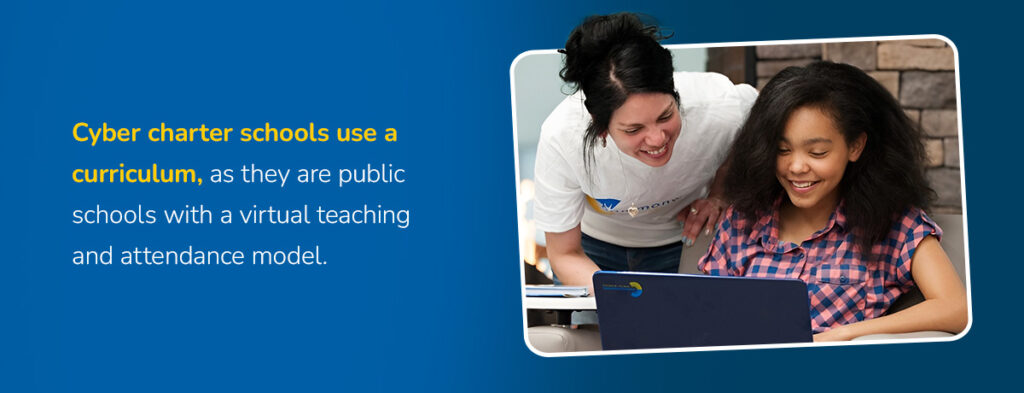
Cyber charter schools use a curriculum, as they are public schools with a virtual teaching and attendance model. Like traditional schools, they are accountable to state academic and reporting standards. However, cyber charters have unique differences in their curriculum, instruction, and learning environment.
While traditional schools often follow district-selected materials and pacing guidelines, cyber schools like Commonwealth Charter Academy use digital platforms to support flexible pacing, live instruction sessions, and personalized learning. Here are key factors that influence the decision-making for a cyber school curriculum:
CCA, an accredited cyber school, designs curriculum to support students across grade levels, subject areas, and personal interests. This comprehensive approach gives students room to build core academic skills while exploring the topics and career pathways that interest them.
CCA’s certified teachers prioritize personalized success for students in grades K-12, approaching every course with student engagement and growth in mind. That way, every child feels empowered to explore their passions and potential career path.
Enroll your child today and set them on a path to success!



Enrolling Now for 2026-27 School Year.