Enrolling Now for 2026-27 School Year.
Enrolling Now for 2026-27 School Year.
A positive behavior support plan, or PBS plan, is a proactive, compassionate approach to helping children develop more constructive behaviors. Rather than relying on punishment, PBS focuses on understanding why a behavior is happening and teaching a child what to do instead.
Instead of trying to “fix” a child, PBS gives them real tools they can use to succeed, tools that build on their strengths instead of focusing on what’s going wrong. In an online classroom, these principles can make learning more inclusive and effective for students of all abilities, whether a child needs occasional support or is part of an ongoing behavior intervention plan.
Think of a PBS plan as a blueprint for reducing challenging behavior and building better habits in its place. Most effective plans rely on three types of strategies working together:
The most effective PBS plans include enough detail for teachers and learning coaches to consistently put these three strategies into practice, based on each child’s needs.
A PBS plan aims to help children build long-term well-being and independence. Instead of labeling behavior as simply “wrong” or “unacceptable,” PBS looks for the root cause and guides a child toward a better response.
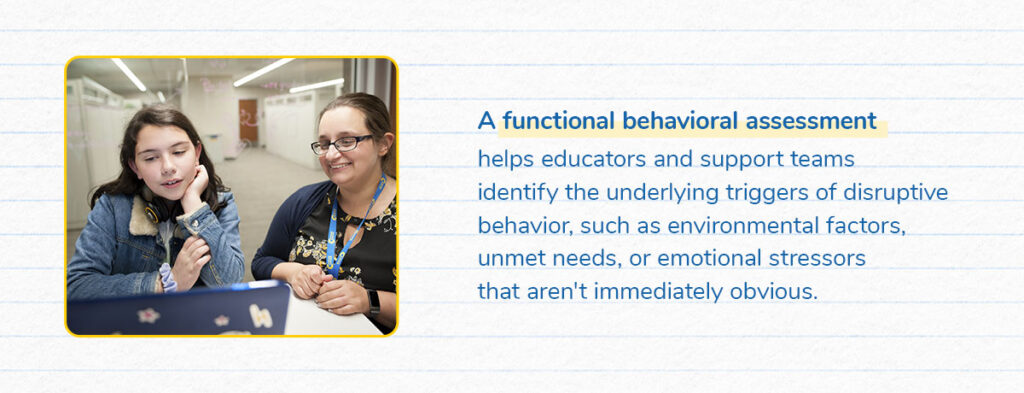
A functional behavioral assessment is often the starting point. This process helps teachers and support teams identify the underlying triggers of disruptive behavior, such as environmental factors, unmet needs, or emotional stressors that aren’t always obvious at first glance.
From there, the PBS plan outlines strategies tailored to that child, which may include:
The goal is to give a child practical tools they can use in and out of the classroom. Over time, this proactive approach builds resilience, strengthens relationships, and helps children take ownership of their behavior.
Teachers and learning coaches in an online learning environment have plenty of everyday opportunities to put PBS strategies into practice. These moments are often small, but they can be powerful turning points when approached with intention and consistency.
For example, if a child regularly logs off before a session ends or disrupts the class with off-topic comments, that behavior may signal frustration, fatigue, or difficulty with self-regulation. Rather than responding with punishment, a PBS approach encourages the adults around a child to look more deeply and offer a compassionate alternative.
One effective tactic is teaching a child to raise their hand and request a short break when they start to feel overwhelmed. This replacement behavior reduces disruption while building self-awareness and self-control.
Another scenario might involve a child who refuses to join group activities. Instead of labeling that behavior as defiant, a PBS approach explores possible causes, like anxiety or sensory overload, and offers solutions such as smaller breakout groups or structured sessions that feel less intimidating. Reinforcing these adjustments with praise and consistent follow-through helps a child feel seen and understood.
Ultimately, PBS is about teaching, not correcting. It gives children the confidence to communicate their needs, make better choices, and build skills that last well beyond the virtual classroom.
Behavioral disorders are more common among younger adolescents than older teens, which gives parents and teachers of younger students an opportunity to put supportive habits in place early, habits that can carry a child through the years ahead.
PBS plans can be especially useful in online learning. Here are six best practices to help make the most of these strategies in a virtual classroom:
Whether a child could benefit from a PBS plan depends on several factors. Parents are often the first to notice a pattern worth addressing, though an observant teacher may also recommend a PBS plan after seeing a child’s challenges persist over time.
The distinction between academic and behavioral needs matters here. A drop in grades or frustration with a specific subject may point to a need for tutoring, learning aids, or a personalized curriculum. Disruptive behavior that interferes with learning, especially in an online setting, may instead indicate the need for a PBS plan to help guide your child toward steadier, more constructive habits.
CCA believes every child does better with the right support in place, and a PBS plan can give your child, their teacher, and you a shared blueprint for getting there. Positive reinforcement, consistency, and understanding go a long way toward reducing challenging behavior and building healthy daily habits that last.
Would your child benefit from a flexible online learning schedule and teachers who take the time to understand what makes them tick? CCA’s personalized curricula and supportive, experienced teachers help every child build the behavioral skills and confidence they need to thrive, in the classroom and beyond.
Request more info about our online K-12 cyber school, or reach out about enrolling your child with CCA today.
Enrolling Now for 2026-27 School Year.